The Anchor Protocol For The Terra Network Blockchain

This article provides information about the Terra network and the Anchor Protocol. This will allow access to the Terra blockchain ecosystem, which provides users with access to DeFi (Decentralized Finance) applications.


Terra Blockchain

Anchor is a savings protocol offering low-volatile high yields on Terra stablecoin (UST) deposits. While banks are offering less than 0% interest on savings, Anchor offers between 19 – 20% APY. The Anchor protocol makes use of the Terra blockchain ecosystem to earn users higher yields on their deposits. 

The protocol is decentralized. There are no required sign-ups other than access to a wallet. There are no minimum deposits, account freezes and users can immediately withdraw funds at any time. 

Anchor also lets users borrow against their digital assets as the collateral. The borrower is issued Terra stablecoins based on an LTV (Loan-to-Value) ratio. The higher the LTV for borrowing against collateral, the higher the risk of liquidation if the borrower is not able to maintain the ratio. The good thing about it is that this provides liquid assets to users without losing their original assets. As long as they pay back what was issued, they can recover their collateral.

Users can also stake ANC tokens to earn more tokens. This can also be provided to liquidity pools for the ANC/UST token pairing. The protocol’s simplest earning product is a UST savings deposit, which can earn up to 20% APY.


Participants

The participants are the users of the Anchor protocol. There are 4 main types.

  1. Lenders – Deposits Terra stablecoin UST for lending to earn % APR. In return they receive a token bond issued as aTerra. This is used to redeem the deposit along with accrued interest.
  2. Borrowers – Deposits collateralized digital assets in the form of bonded assets or bAssets (e.g. bETH or bLUNA) in order to borrow money based on an LTV ratio. The borrowed money is against the borrower’s collateral and is in UST stablecoins.
  3. Liquidators – Purchases liquidated collateral from bidding. When a lender is about to default or has reached the threshold LTV, the liquidation process allows for bids to liquidators.
  4. Liquidity Providers – Provides liquidity to a pool for token pairing of UST/ANC. In return, liquidity providers earn from transaction fees made from the liquidity pool.


Tokens

There are 5 types of tokens involved in the Anchor protocol.

UST (USD Terra) – The Terra stablecoin that is pegged to the USD (US Dollar) in price.

– 1 UST = 1 USD

aTerra (Anchor Terra) – Represent the deposited UST stablecoins. 

– Redeemable for initial deposit D and accrued interest i

aTerra = D + i

– To receive aTerra, a user must deposit their digital asset as bAssets. 

The aTerra is then issued based on the LTV ratio. 

bAssets (Bonded Assets) – The locked collateral

– Locks the value of assets from collateral

  • Bonded Luna (bLuna) – Token backed by Luna
    – CW20 compliant for fungible tokens (ERC20 based)

– exchangeRate = lunaBonded / bLunaSupply

  • Bonded ETH (bETH) – Token backed by ETH
    – CW20 and ERC20 standard

– ETHexchangeRate = stETHbalance / bETHSupply

Anchor (ANC) – Governance Token

– Allows token holders to participate in digital governance for  policy making decisions and development of the protocol.

ANC-UST LP – Liquidity Pool (LP) token issued for users who provide ANC/UST token pair.


How to Earn From Anchor 

There are 4 DeFi products that allow users to earn from Anchor.

  1. Deposit UST to earn up to 20% APY (subject to change)
    • Users deposit their UST to earn % interest APY.
    • Users receive a bond of their deposit as aTerra.
    • The longer the user keeps their deposit in savings, the more interest they can earn.
    • Withdrawals can be made at any time.
  2. Stake ANC and earn ANC
    • Users stake their ANC governance tokens.
    • There is a % APY of staking rewards given to ANC stakers.
    • Rewards from staking are claimed when users unstake their ANC.
  3. Provide liquidity for ANC/UST token pair, earn ANC
    • Users provide equivalent amounts of ANC and UST for liquidity.
    • Their pool contribution is issued as ANC-UST LP token.
    • Users earn from transaction fees from the pool.
    • The ANC-UST LP token is used to redeem the user’s earnings, when liquidity is removed by burning the LP tokens.
    • Users receive the amount of the ANC and UST they provided along with the earnings, depending on the number of LP tokens burned.
  4. Collateralize bLUNA or bETH to borrow UST and earn ANC
    • Users provide digital assets (ETH or LUNA) as bonded assets for collateral.
    • Users can borrow against their collateralized assets using an LTV ratio.
    • Users can borrow until the loan’s LTV ratio reaches the MAX LTV, calculated based on collateral types, their prices, and deposit amount.
    • Users can use the money they borrow to earn ANC.


Liquidation Contracts

  • The higher the LTV, the higher the risk of liquidation.
  • Manages collateral liquidations of loans at risk of under collateralization.
  • Used by liquidators to purchase liquidated collateral.


Synopsis

Anchor allows users to earn by allowing deposits of their UST for % APY.

They can also borrow for collateralized lending using bETH and bLUNA tokens.

Staking allows users to stake ANC tokens for yields and claim rewards.

Contribute to liquidity, allowing users to provide ANC-UST token pairs to a liquidity pool and earn from transaction fees.

Disclaimer: This is not financial advice. The information provided is for educational and reference purposes only. Do your own research always to verify facts.

The Ethereum Altair Upgrade – Merging PoS With The Beacon Chain

The Ethereum Altair upgrade was completed on October 28, 2021. This is part of the transition to ETH 2.0, as PoS (Proof-of-Stake) consensus mechanism merges with the Beacon Chain.

The upgrade implements the following:

  • light-client support to the core consensus.
  • Setup of beacon state incentive accounting.
  • Fixes validator incentives issue.
  • Penalties for offline or inactive validator nodes per EIP 2982.

Over 95% of the network participated at the time of the upgrade’s first epoch. This is the first upgrade to the Beacon Chain since going online in December 2020 and could also be the last before the merge with PoS on the Ethereum mainnet.

According to IntoTheBlock researcher Lucas Outumuro:

Through the Altair upgrade, Ethereum sets the base for this vision, enabling the upcoming merge of the proof-of-work chain and the Beacon Chain. Finally, these are expected to benefit Ether holders and stakers by making it deflationary while offering higher returns to validators.”

The recent London Hard Fork had introduced a base fee as part of EIP 1559 with a coin burning mechanism that adds a deflationary feature to Ethereum. During the first 48 hours of that upgrade, $30 million in ETH were burned from the network’s circulation. As of 10/30/21, 681,030 ETH have been burned that is valued at $3,013,073,269. This puts pressure on supply as it decreases and drives the price of ETH higher due to market demand.

With ETH 2.0 set for deployment in 2022, Altair is part of the preparation. Altair is a hard fork, which means that the 250,000+ validator nodes who didn’t upgrade are now considered offline. Their ETH will then slowly diminish at about 10% per year. This was included in Altair as a sort of way to push for moving towards the upgrade. This not only benefits the validators, but the network as a whole as it comes to an agreement to pave the way for Ethereum’s next phase.

VISA Gets Into NFT With CryptoPunks

VISA has announced the purchase of a CryptoPunk NFT (Non-Fungible Token) worth approximately $165,000 (~50 ETH this August 18, 2021). Perhaps the most unlikely thing you would expect VISA (the financial credit company) to invest in. VISA is apparently bullish on NFTs, or could this just be another signal to show they are “in the know” or “part of the gang”? CryptoPunk NFTs are original digital artwork made by Larva Labs. These are unique collectible characters that have verified ownership on the Ethereum blockchain. They are not physical objects at all, but purely digital. They look just like icons or emojis, not at all like the works of art you would see in a gallery.

This shows that VISA is getting in on the DeFi (Decentralized Finance) market with NFTs. According to their recent tweet:

“Over the last 60 years, Visa has built a collection of historic commerce artefacts—from early paper credit cards to the zip-zap machine. Today, as we enter a new era of NFT-commerce, Visa welcomes CryptoPunk #7610 to our collection”

NFTs like CryptoPunks, despite looking like mediocre art, hold plenty of value. A typical CryptoPunk can bid over $20,000 while the more in demand will bid in the millions of dollars. That shows that there is a big market for these collectibles and the buyers have plenty of money to spend. This is not your basic retail market where items cost a few dollars. This is a big money market, and it has attracted VISA’s attention.

What makes CryptoPunks desirable as a collectible is their uniqueness. A CryptoPunk character (i.e. Punks) is algorithmically generated by computer, not manually created by a human artist. There are also different types like Apes, Zombies and Aliens. Each CryptoPunk character has their own set of attributes and their metadata are recorded on the Ethereum blockchain. That also includes the proof of ownership to the holder of the NFT.

It seems like VISA will hold this NFT for the collection purposes. It will hold the CryptoPunk for historical records, perhaps to document a time when NFTs first emerged. This will surely be valuable in the future, whether NFT continue to become successful or not. Just owning a piece of history is valuable in itself, so VISA is going to look back on this as having a memento to that timeline. Overall the NFT market continues to grow. According to Forbes, the NFT market grew 1,785% In 2021. It is now the fastest growing sector in DeFi that is also gaining pop culture adoption and VISA is jumping on board.

Moving forward, it looks like VISA is also on the horizon ready to enter new partnerships and projects related to NFTs. As a payment processor, VISA can help bridge the traditional finance market with the DeFi space. That opens a world of opportunities for buyers, sellers and developers.

London Hard Fork Brings The Burn To Ethereum

The Ethereum network has activated the London Hard Fork successfully (12:34 UTC, Block# 12,965,000, 8/5/2021). In the first two days, $30 Million of ETH (Ether) were burned. That amount of ETH burned, removes approximately 3,000+ ETH from circulation. This is part of the EIP 1559 specification in which a certain portion of the transaction fee is burned per transaction. The hard fork also makes transaction fees on the Ethereum blockchain more predictable. This creates lower gas fees that can bring the costs of transactions down since there is now a base fee.

The introduction of a base fee addresses the volatility in transactions. This is regarding the cost of gas prices during times of network congestion. When the network is at its busiest, the cost of gas can suddenly increase which is why recent transaction costs on the Ethereum network has been high. With a base fee, this can prevent gas prices from suddenly shooting up to levels where it makes more sense to send large transactions than lower ones.

Since Ethereum uses an inflationary currency model, the burning introduces a deflationary system for the first time. This puts a check on the amount of ETH in circulation, which can affect prices to the upside. This has become controversial since it affects miner rewards, but the Ethereum network is moving away from mining (Proof-of-Work) consensus. A protocol difficulty bomb is part of the design for Ethereum 2.0 (ETH2.0) that will make mining more difficult, encouraging validators to move towards staking (Proof-of-Stake) consensus. The London Hard Fork will delay this at the moment to allow time for transition.

In a nutshell the London Hard Fork has enabled the following features:

  • Establish a base fee for transactions
  • Provide more transparency and predictability to transaction fees
  • Make ETH a more deflationary asset with a burning mechanism

Here are other EIPs activated during the London Hard Fork:

EIP 3554 delays the “difficulty bomb”.

EIP 3529 reduces gas refunds. Gas tokens (e.g. Chi) will become obsolete.

EIP 3198 allows users to return the base fee opcode.

EIP 3541 enables future upgrades to the Ethereum Virtual Machine (EVM)

Overall this introduces steps that will bring Ethereum closer to a minerless future. This gives time for miners to transition to staking, but once the difficulty bomb is activated it begins the “Ice Age” for mining. The new structure for transaction fees is also a positive development in light of the skyrocketing costs to run a transaction on the Ethereum blockchain. It doesn’t exactly lower gas prices, but makes it more manageable with a base fee. At least users will not have to deal with sudden increases when all they want to do is transfer ETH to another wallet or swap tokens. ETH will also be headed towards a more deflationary asset as well, with the burning of portions of its transaction fees. All of this creates positive market signals that drives further utility on the Ethereum blockchain.

(Photo Credit by Chris Schippers)

Come On Amazon, Get Into Crypto Already

In Big Tech, Apple was usually the one who was late to the party. When it comes to crypto, that does not seem to be the case. Apple has made moves to hire an “alternatives payment” manager that we can assume involves cryptocurrency. It became obvious when one of the key qualifications mentioned was experience with cryptocurrency. Google has been involved with blockchain technology related matters like their partnership with Theta Labs network. Other Big Tech companies like Twitter, Facebook and Microsoft have dabbled with blockchain and cryptocurrency on occasion but there is one company that we have not heard much about recently being involved in crypto … Amazon.

Amazon has actually patented a blockchain-based product authenticator back in 2020. It is not using cryptocurrency (as of writing) and has not really been in the news much. Amazon even removed crypto from their payment methods from the Twitch.TV platform . There is however news that Amazon is moving towards cryptocurrency payments. Just like Apple, Amazon is looking for a digital currency and blockchain expert. They might be considering crypto payments for their online retail business.

It is a big deal if Amazon embraces crypto. Not just for payments, but if the company invests in digital assets like Tesla. Amazon has a large retail empire which they could open to retail for cryptocurrency. This will most likely require payment processors like Visa, who have started to process cryptocurrency for payments in 2021. Amazon may permit payment processors to handle cryptocurrency to fiat conversions, meaning the final payment will still be in fiat.

Developers would find it an opportunity to create gateways for payment processors from crypto to fiat. Regulations must be followed as part of jurisdiction laws, so how it will be implemented is the challenge. The less you have to deal with regulators, the better it will be to just allow others to deal with it. Then again why would Amazon need a third party, when they are more than capable of implementing a system with their vast resources available.

According to an Amazon spokesperson:

“We’re inspired by the innovation happening in the cryptocurrency space and are exploring what this could look like on Amazon. We believe the future will be built on new technologies that enable modern, fast, and inexpensive payments, and hope to bring that future to Amazon customers as soon as possible.”

It sounds like the type of news that can move the market to the upside. It is also what speculators want to hear because it can generate more interest in Bitcoin and other cryptocurrency. That usually leads to FOMO buying sprees that help drive prices of digital assets higher. While the news cycle from the media had been full of FUD the past few weeks since “Elon FUD” back in May, it has since become more positive. Whether or not Amazon does finally consider cryptocurrency payments or develop their own token, they have confirmed their interest. For many analysts that is a sign that cryptocurrency is not about to go away any time soon.

(Cover Photo Credit by Anna Shvets)

Apple Pay and Coinbase Bring Crypto Payments To Retail

As of June 2021, users who have Apple Pay can now pay for items with cryptocurrency by way of the Coinbase debit card. The card also supports Google Pay with the option to pay with cryptocurrency like Bitcoin and Ethereum. In a press release statement (From the Coinbase blog):

“You can now use your Coinbase Card with Apple Pay and Google Pay to make it even easier to spend crypto at home and on the go.”

It is Coinbase that has integrated cryptocurrency payment options, and is not directly from Apple Pay. This means that users will need a Coinbase card first, which can then be added as a payment option on Apple Pay.

Coinbase provides a debit card from which users can attach their cryptocurrency wallet to use funds. One of the perks it offers is a cash-back spending feature (up to 4% according to Coinbase). This rewards heavy users back to their iPhone.

Before a user can pay with cryptocurrency, it is clear that it is not a direct exchange of value. It must first be converted to fiat at the point-of-sale. The merchant must also support payments in cryptocurrency, so this means that users cannot just use their card to make any payment in cryptocurrency. Merchants who accept the card can offer designated cryptocurrency payment methods (e.g. ETH, XLM, BTC).

Cryptocurrency debit cards are providing users not just a new payment method, but a way to actually use digital assets as a medium for exchange. They can be used to pay for goods and services where it is accepted, and that allows more utility for cryptocurrency. There are other types of cards offered by Crypto.com and BitPay, with their own reward system for users.

With crypto payments going toward mainstream adoption, the question is whether the volatility will have any negative effect. An example of this is sudden change in price of a cryptocurrency in the middle of a transaction. How will payment processors handle the variations, which can suddenly increase or decrease without warning? The idea is making the payment at the point-of-sale, but users may delay in paying from the time of quote. In the real world, prices are fixed with fiat currency and users pay for an item as listed. Prices don’t suddenly change after a few minutes. With crypto, prices can suddenly change while a user is waiting to make a payment. This is certainly something that will be tested.

Certain crypto, like Bitcoin, may be considered too valuable to spend. However, that would probably be the digital asset merchants would like to accept for cryptocurrency payments. Users will have to consider whether they want to spend fractions of their BTC for a pair of sneakers or just HODL it. There are other crypto options of course, which is why this can still work out for both users and merchants. Another thing to take note of are the transaction fees. Users would probably want to use a blockchain where transaction fees are cheapest to spend their crypto.

Stablecoins may provide a better solution to go around the volatility. This might be a good option since it is pegged to more stable assets. Users can set their Coinbase card to use a stablecoin like USDC as their payment option method. All users will need to do is convert a certain amount of their base crypto like Bitcoin to a stablecoin. From there they can fund their debit card with less worries about volatility.

Both Apple Pay and Google Pay come from large tech platforms that serve millions of users. Integration with cryptocurrency payments is further simplified through the use of smartphones. Apple Pay users have iOS (iPhone) while Google Pay users have Android (Samsung, OnePlus, Huawei, etc.). This finally takes the world of retail digital payments to the blockchain.

Tokenizing Stocks Is The Next Financial Instrument

Binance is offering a new financial instrument on its digital exchange. They are offering a way to purchase fractions of a company’s shares using a tokenized stock trading service. This will provide stock traded equities in financial markets for investors. Binance will begin with Tesla stock on their exchange. The instrument is called a Binance Stock Token, and this allows users to buy a stock or a fraction of a share and earn dividends as well. The prices will be settled in Binance’s BUSD stablecoin token.

For users who have no access to financial markets, they now have an opportunity to own as little as 1/4 of share in an equity like Tesla (TSLA). There is no more need to purchase several stocks when you can have just a fraction and earn from it. This gives exposure to the non-traditional crypto investors who don’t have to wait for other platforms to offer the service.

S = Shares of A Stock
p = Price of the Stock
b = BUSD

b = S(p)

The user will purchase the stock in BUSD prices (b).

Binance claims that they are not creating synthetic assets to offer as stock. They have an asset that is backed by a depository portfolio of underlying securities, which is also managed by a German investment firm. In order to follow compliance, the service is not available to all jurisdictions and only where the exchange is allowed to offer such a service. Those interested will definitely be required to submit a KYC/AML document for legal purposes.

Two things that I can expect to see:

  1. Increase in BUSD trading as a result of the tokens use for investing in stocks. BUSD prices will not surge because it is pegged 1:1 with the USD.
  2. Open up the stock market to first time investors who have never had exposure to equities. This allows users who were either not allowed to trade because of lack of funds or not have access to stock investments to get their chance.

It is interesting to note if other DeFi products will follow that can interact with the Tesla stock. Binance also has its native Binance Smart Chain(BSC) which uses smart contracts that can lock tokenized stocks in a different protocol and earn from it. Some DeFi protocols may even accept tokenized stocks as collateral, depending on how valuable it is in the market.

This can also further boost Tesla stock prices as it has seen a phenomenal surge. Binance can gain more investors while helping bring Tesla stocks higher. While the trends look good for Tesla, investment always involves risk so users must do their due diligence and research always before investing.

Disclaimer: This is not financial advice. The information provided is for educational and reference purpose only, not for making investments. Do your own research always.

EIP 1559 And Ethereum As A Deflationary Currency

An issue with Ethereum is about to be addressed regarding its non-capped supply of ETH (Ether) with EIP 1559. The proposal aims to introduce a new protocol for addressing the transaction fees on the network targeted for release in July/August 2021. In the proposed change, during a transaction a small amount of Ether (ETH) is “burned” every time it is used to pay for gas fees. This token burn can somehow control the circulating supply of ETH as well, leading to a more deflationary money supply. The burned tokens are removed from circulation forever but new ones can still be created. Overall, this can add some controls on the amount of ETH being put out in circulation as form of inflation control.

Transaction fees are not consistent on the Ethereum network. They fluctuate every so often, but when there is high network demand the fees surge to sometimes ridiculous levels. For the seasoned trader it may not matter, but for retail and new traders it can be too much for smaller sized transactions. More experienced traders may deal with large transactions where the cost of gas does not matter as much. The prices are still high and there needs to be some improvement in which issues like scaling and layer 2 solutions aim to resolve.

TxFee = Total Gas Used * Gas Price Paid

As of March 7, 2021, the average cost of a transaction is $15.53. Just a few months earlier on January 17, 2021 the transaction fee was only $5.41. That goes to show a sudden increase of 187%, which could have been worth at least 2 transactions back in January or earlier in 2021. The demand for ETH in the DeFi space and hodling portfolios due to the good news coming out about ETH2.0 is helping to drive prices and at the same time increasing network activity. The congestion is expected, as the same thing happened back during the cryptokitties and ICO era. This puts plenty of strain on the network, but it has problems scaling since it can do at most 15 tps (transactions per second). The promise of ETH2.0 is a bring faster consensus with more efficiency through a staking protocol (i.e. Proof-of-Stake) to scale the network.

EIP 1559 is an improvement proposal to help make transaction fees more consistent and prevent it from getting to such high levels that many are not willing to pay. Currently with Proof-of-Work, the miners can determine the fees and increase it in order to prioritize a transaction. Nodes called miners set the price of gas used to process transactions, based on the supply and demand of computational resources available from the network. It is in units called Wei or Gwei, just smaller denominations of ETH. The proposal is to use what is called a BASEFEE, that is set based on the network’s level of transactions. What it aims to provide is a market rate rather than a reference based on prices that users are paying for. This structure eliminates the guess work often involved in calculating the transaction fees.

Some see this as adding deflationary measures because of the token burning feature. As tokens are created, they are also destroyed. That keeps the circulating supply in check and prevents any inflationary pressure, according to some analysts. This form of negative inflation could lead to less ETH in circulation, thus increasing market price. While this looks good to traders and core developers, some miners don’t exactly agree with the proposal. They don’t derive the same benefit as much since the token burn benefits token holders more than miners. The miners lose out on their profits that would have been the burned tokens.

The outcome may push for EIP 1559 despite the protests. Ethereum plans on moving away from mining and into staking, so it does make more sense to implement the protocol rather than continue with the current system. Mining will also become more difficult as specified in the protocol for ETH2.0 (e.g. difficulty bomb), that nodes would rather switch to staking since mining will be less profitable until it is totally no longer possible due to the increase in difficulty level. That leads to questions about whether the miners will hard fork Ethereum, but that may be a horrible idea. If no one supports the fork then the miners have a lot to lose, while the mainnet remains profitable with new nodes entering the network. EIP 1559 will surely be activated with > 50% consensus, but the miners can signal a no to the network and not activate it. What is important that still needs to be addressed are the high transaction fees, The hopeful resolution is that the miners and developers come to some agreement to determine transaction fees which really needs to be addressed to further the momentum of growth on the network.

Bitcoin Wrapped In Ether – Yummy!

You can take two good things and combine them together to get the best of both. In LA’s streets you can get what some would consider one of the city’s iconic sandwiches. It is the hotdog wrapped in bacon. It brings you the meaty flavor of a hotdog with the greasy goodness of bacon. Now think about the top digital asset Bitcoin (BTC). What would you wrap it with if you were to compare it to a hotdog wrapped in bacon? How about Ether (ETH), the Ethereum blockchain’s token. BTC is your hotdog, while ETH is your bacon. It actually exists and it is called Wrapped Bitcoin (WBTC).

Wrapping one cryptocurrency with another uses the hotdog wrapped in bacon example as a simpler way to illustrate an analogy. Wrapping in this sense means to create a protocol to represent one cryptocurrency on another cryptocurrency’s blockchain. BTC can be represented on the Ethereum blockchain by issuing an ERC-20 token called WBTC. This allows BTC integration with smart contracts that can be traded on the Ethereum network using the ERC-20 standard.

In Wrapped Bitcoin, BTC is locked into a smart contract and issued as WBTC. This allows BTC holders to access DeFi systems on the Ethereum blockchain. It is as good in value as BTC which is verified by a Proof-of-Reserve system. This ensures a 1:1 peg between the issued or minted WBTC tokens and BTC. The actual BTC is still on the Bitcoin blockchain since you cannot store it on the Ethereum blockchain. The BTC is taken under the custody of the WBTC token issuer, so it is not directly with the WBTC token holder. It is maintained by a group called the WBTC DAO, who are the custodians of the BTC. The group’s members include blockchain-based organizations like BitGo, Ren and Kyber.

What is the purpose of WBTC?

As mentioned earlier, it is primarily for giving BTC holders a way to gain access to the DeFi markets. A large portion of the DeFi space uses the Ethereum blockchain and BTC is not directly compatible with it. It is a bridge that allows BTC holders to use DeFi protocols to provide liquidity or participate in other services that yield returns. WBTC is a way to bring the value from BTC into the DeFi space without having to convert BTC to ETH. BTC (as of 2020) has the largest cryptocurrency market cap and this is crucial in helping bring liquidity to the DeFi space as well as expanding on the collateral types available.

This is a great way for BTC holders to take part in the DeFi markets. Many BTC holders have plenty of value stored, but are not able to use it if they are HODLing. DeFi provides ways for cryptocurrency to earn even while HODLing, using decentralized protocols like Uniswap, Curve and Yearn. Most DeFi protocols will only support ERC-20 or ETH since they execute from smart contracts on the Ethereum blockchain. WBTC is a protocol that allows BTC to be wrapped in an Ethereum ERC-20 token. Holders would not need to convert their BTC to ETH during this process.

Minting WBTC

To enter the DeFi space, Bitcoin holders would have to deposit their BTC into a smart contract of a WBTC issuer (e.g. BitGo, Coinsquare, etc.). This can be a digital exchange or DEX (Decentralized Exchange) that accepts BTC. Once the BTC has been deposited, WBTC tokens are minted that have a 1:1 value to the BTC that was deposited. Once the holder receives their WBTC, they can now use it for loan collateral, providing liquidity and swapping for other tokens. Digital exchanges will most likely require a KYC (Know Your Customer) in compliance with the law before the WBTC can be issued. On a DEX or over-the-counter it is not required (check with the exchange requirements always). The WBTC can be cashed out to either BTC or ETH.

Another way to get WBTC is through a DEX like Uniswap. Instead of depositing BTC into a smart contract, anyone who holds ETH can purchase WBTC. It requires connecting a digital wallet like Metamask to perform the transaction with ETH. The WBTC is already available in the market and it does not require BTC for purchase in this case. Since WBTC is an ERC-20 token, it can be purchased with ETH very easily.

Other Uses For WBTC

WBTC can be put to use in DeFi yield farming protocols. This allows WBTC holders to put their digital asset for lending and trading purposes. In return, the WBTC holders earn yields as a their return on investment. These yields are fees collected from the transactions. Rewards can be issued in the form of governance tokens, which allow the holders to participate in digital governance through voting. This provides holders a way of participating in decisions that govern these protocols.

Yield farming requires the holders to deposit their WBTC. In return, they are issued another token. Examples of these tokens include SNX (Synthetix token), REN (Ren Project token) and BAL (Balancer token). The tokens are specific to which protocol is used by the yield provider. To learn more about yield farming, there is an article on Coindesk that explains it a little bit further. (Link here)

The Best Of Both

Wrapped Bitcoin brings the best of two blockchains. It is a way to interoperate between two digital assets at the protocol layer. The value of Bitcoin and the decentralized applications on Ethereum. BTC is the digital asset while ETH is the protocol that utilizes it for liquidity, trades and financing. The Ethereum blockchain is serving as a transaction layer that can bring more capital into diverse markets. Bitcoin can provide the capital, as institutional investment grows in the digital asset. WBTC provides a way for investors to bring capital for yielding returns using the Ethereum blockchain.

Disclaimer: This is not financial advice, just reference. Do your own research always to verify information.

The UTXO Model Explained In Cryptoeconomic Terms

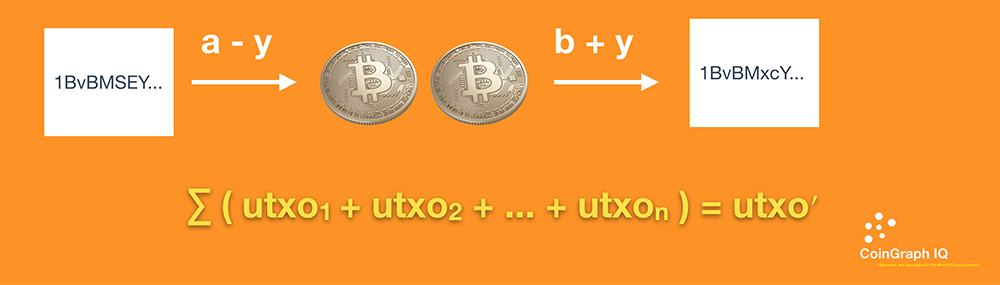
Bitcoin uses the UTXO (Unspent Transaction Output) accounting model for processing transactions. In Bitcoin, a user’s balance is indicated by the unspent amount of BTC that is recorded on the blockchain. A user’s input to a transaction is the output from the last transaction. If the user has no previous transaction, then the input is the output from another user’s transaction. These are processed continuously and written to the blocks which are added to the main chain for immutability. Every transaction on the Bitcoin blockchain has an input and output to prove the transfer and ownership of a digital asset.

There is a misconception that digital wallets store the digital assets. That is actually not the case since the digital assets are always stored on the blockchain. They are just values that indicate the balance or quantity and the ownership by a private key. The digital wallet is really an application that provides users access to their digital assets on the blockchain via a private key. The wallet also contains the public address, which is used to identify the user to the blockchain. Once the wallet is opened, the users can see their digital assets from the blockchain. In Bitcoin, the BTC is always stored on the blockchain. The information is accessed by the user from their wallet with authorization from their private key. Without the private key, a user will not be able to access the information. The private key also creates a digital signature which authorizes a user to send their BTC to another user as a way to transfer the ownership of the digital asset.

When the digital asset is transferred, it is recorded as an output O from the sender. It is then the new input I to the user it was transferred to. It has to always be an input/output relationship for provability. The transactions can be referenced by cryptographic hashes that is called the TxHash (Transaction Hash). Users can view this information on a blockchain explorer like blockchain.com/explorer. The best way to understand this is that inputs reference outputs when making transactions on the Bitcoin blockchain.

Key concepts to understand:

  • Each input to a new transaction was the output from a previous transaction, which can be referenced by a TxHash.
  • Each output was the result of a transaction from a spent amount.
  • The input from an output is considered an unspent amount.
  • All unspent amounts are considered the balance of the digital asset the user owns.
  • The spent amounts become the unspent amounts of other users who received the digital asset.
  • Only unspent outputs can be used as inputs to a transaction in a Bitcoin network.
  • The sum of all unspent outputs is the total balance available to the user.

Let’s take an example.

Bob wants to pay Alice 5 BTC. Bob has a balance of 100 BTC, while Alice has 30 BTC. According to the protocol, the sender is Bob and the recipient is Alice. Both users have a Bitcoin public address, which is a hexadecimal string. The public address is like the e-mail address, it allows users to identify other users for sending digital assets. Bob will send the 5 BTC to Alice via her public address.

Here is how the process works:

  1. Bob unlocks his unspent outputs using his digital wallet to send 5 BTC to Alice.
  2. Bob’s UTXO of 100 BTC is his input to the transaction. Once Bob indicates from his wallet that he only wants to send 5 BTC to Alice, the 5 BTC is deducted from the 100 BTC. (100 – 5)
  3. The 5 BTC are sent to Alice’s address and the remainder of 95 BTC are sent back to Bob.
  4. Alice’s balance is increased by 5 BTC (30 + 5) for a total of 35 BTC.

This is a simplified overview of how the process works. In reality, the transaction must undergo confirmations in order to be validated to the blockchain. This is another mechanism that uses the PoW (Proof-of-Work) consensus algorithm.

Bob’s output (95 BTC) from the transaction will become his input to his next transaction. Multiple transactions can occur on the network at the same time. Suppose that Carol wanted to pay Bob 20 BTC at around the same time that Bob was sending 5 BTC to Alice. This is possible since transactions can run in parallel, though they are still processed in sequence. While Bob’s transaction with Alice has a UTXO of 95 BTC, Bob’s transaction with Carol is a UTXO of 20 BTC.

Bob’s total balance is the sum of all his UTXO,

∑ ( utxo1 + utxo2 + … + utxon ) = utxo’

where n is the last term of the UTXO. In our example Bob’s total balance would be:

Total Balance = 95 BTC + 20 BTC = 115 BTC

Using blockchain analytics, all of Bob’s transactions can be viewed based on the TXHash. This contains information like the block number, number of confirmations and total fees.

On another note, the sum of the UTXO between Bob and Alice must not change. Before the transaction Bob had 100 BTC and Alice had 30 BTC.

100 BTC + 30 BTC = 130 BTC

At the end of their transaction, not including other UTXO, the sum must still be 130 BTC.

95 BTC + 35 BTC = 130 BTC

If the amount remained the same for Bob after he sent 5 BTC to Alice, then this is an example of a “double spend”.

100 BTC + 35 BTC = 135 BTC

The amount of 135 BTC is not correct since 5 BTC was spent from Bob’s UTXO. It should remain balanced at 130 BTC.

UTXO allows the Bitcoin blockchain to keep track of a user’s balance. Every BTC spent becomes a UTXO for another user. It also helps to prevent “double-spending” of a digital asset through a system of confirmations to verify the UTXO exists. The confirmations are possible because the UTXO is read by nodes on the Bitcoin network for validation. When there is a consensus among the nodes on the network that the UTXO is valid and has not been spent on another transaction, it is recorded on the blockchain. Once it is recorded, the data cannot be modified, changed or deleted unless there is a majority consensus to do so. This means no single entity can reverse or commit a double spend of the same transaction (Note: The exception is if they have the majority control (e.g. hash power), which requires at least 51% of the network). The transfer of ownership of BTC is thus concluded in the transaction.