The Lightning Network – A Micropayments Layer For Bitcoin Transactions

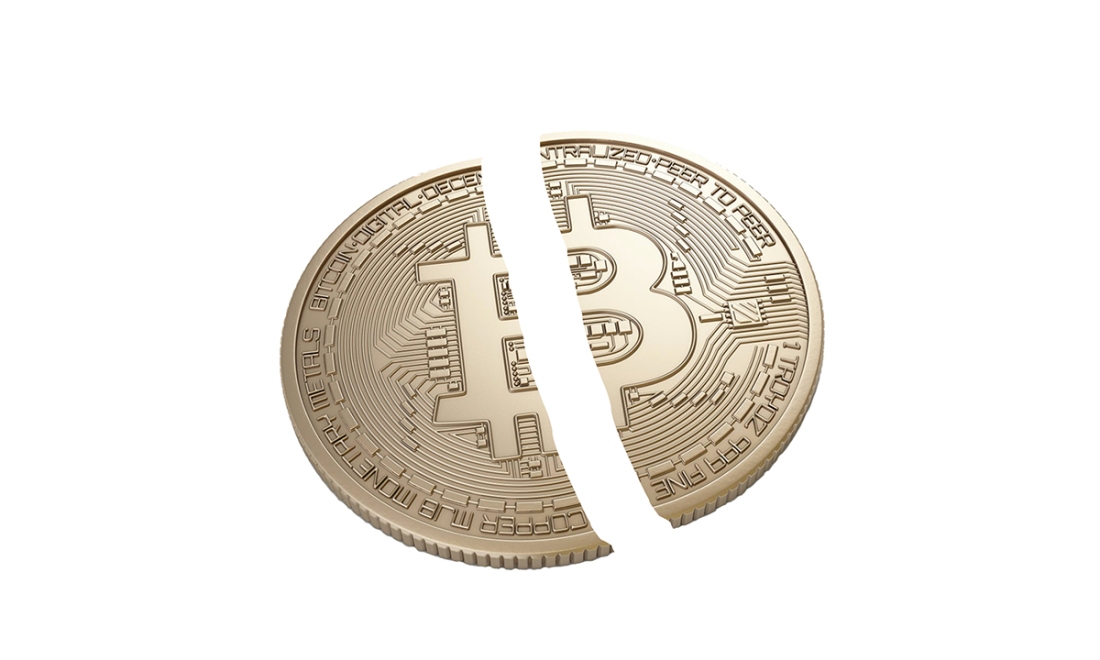
Scalability is one of the main criticisms against Bitcoin (BTC), since the network is not capable of more than 7 TPS (Transactions Per Second). This is due to the “Scalability Trilemma” of blockchains, in which there is a tradeoff of scalability with security and decentralization. You cannot have all three things at once so it requires a balance of resources. If you value more decentralization, you will get more security as well but that will be at the expense of scalability. The blockchain cannot scale if there are too many nodes on the network. When compared to the VISA and Mastercard network, Bitcoin is not on the same level when processing transactions. The VISA network can process over 1,700 TPS or close to 150 million transations per day. In reality though, it doesn’t always reach these values but it gives some idea of the scale VISA is capable of.

While the developer community looks to the fundamentals of Bitcoin as its strength, others view ways to preserve the core architecture while introducing new features to enhance it. One way to improve scaling is through a Layer 2 solution called the Lightning Network (LN). This protocol moves the computational process from the blockchain main network to an off-chain layer. This puts less work on the nodes while using an off-chain layer as the solution to process direct peer-to-peer transactions using payment channels. The blockchain will then be used for settling the transaction and recording it. These can also be implemented as sidechains, which still have a Merkle Root for provability that they are a part of the blockchain. In theory the LN can process up to 1 million TPS and support other cryptocurrency (e.g. Litecoin).

One of the main talking points of the Lighting Network is reducing transaction fees. This means instant payments that only require a fraction as fees. The idea is to enable micropayments using BTC and make it much easier to pay for items like a cup of coffee. Prior to that, paying for coffee with BTC was impossible. Merchants do not accept BTC and the transaction fees were quite expensive. It made more sense to use BTC to move millions of dollars of currency than to transact $5.00 for a cup of coffee. Developers also promote the idea of using the Lightning Network for Atomic Swaps, which allow large amounts of BTC to be exchanged for other currency or cryptocurrency.

The LN has been in development since 2016. One of the requirements needed to support it was the activation of SegWit BIP 141 UASF. SegWit was activated on August 24, 2017 after the Bitcoin community agreed on BIP 91 (signals the support to activate BIP 141). While it has been steadily improving for production use, it is not without critics. The Bitcoin Cash community hard forked from Bitcoin because one of the reasons was that they did not support SegWit and the LN. The Bitcoin Cash supporters believe in larger block sizes and on-chain solutions as opposed to maintaining existing block size and off-chain solutions. Other critics have expressed concerns that the LN could become centralized with payment channels. Several channels could form one large channel and monopolize the network, in theory. Other views state that the channels could become like intermediaries, with the power to deny transactions and thus defeats the purpose of a decentralized system.

There are 3 possible problems with the LN (from Investopedia):

  1. Transaction Fees
  2. Nodes are susceptible to hacking
  3. Does not solve network effect in Bitcoin

Users will choose whichever has smaller transaction fees. If the main network has lower fees, then there is no need for a Layer 2 solution. However, if the main network is slower then it makes an off-chain solution ideal. A faster LN can process transactions faster and more efficiently than the main network. Fees should eventually lower when there are more users.

Since LN nodes have to be online at all times, if a hacker knows the LN node’s IP address and network, they can attempt to attack it. They can attack the node to disrupt its service or even to try to steal BTC. When a node goes off-line, by accident or intentionally, it can also affect transactions. A Fraudulent Channel Close can occur if a channel closes before the transaction completes and pocket the BTC. Network outages can also bring the LN system down if the payment channels are too centralized.

While the LN is aimed to increase adoption of BTC as a form of payment (i.e. medium of exchange), it may not be able to keep up with the network effect. Bitcoin Cash claims to have solved the problem with micropayments since it has a faster network than Bitcoin. In order for LN to be more successful it must be used for making BTC payments. It appears though that more people are willing to hold on to BTC as a store of value rather than for making payments.

Whether LN will become an integral part of Bitcoin, is still up for debate. It presents an excellent idea but it may already be outdated. More Bitcoin maximalists are really just looking at BTC as a digital asset counterpart to gold, so it is a new store of value. As BTC becomes more valuable, people will not likely spend it for micropayment transactions. This is where the altcoins fit the bill for that purpose. Instead BTC will be like digital gold, stored safely by HODlers in their hardware wallets. This creates a dilemma for the LN, but it can still work out for the best. BTC can be divided into smaller denominations or units called Satoshis. The LN can prove its value by providing a safe and easy way to make micropayments using Satoshis. Proving its value will make it a better proposition for developers to incorporate the LN in their applications, and that could onboard users for greater adoption.

Avoid Crypto Scams – Not A “How-To”, But Friendly Advice

A coordinated attack against social media platform Twitter (around July 15-16, 2020) led to a hack that targeted popular accounts. These were not just any accounts, but influential public figures. Included in that list were former US president Barack Obama, Microsoft’s Bill Gates and founder of Tesla and SpaceX Elon Musk. What makes this all the more interesting is that hackers used these accounts to solicit cryptocurrency, specifically Bitcoin (BTC). In the scheme, the hackers used the account to mention some feel good words about giving back to the community during the Covid-19 crisis and then requested people to send them BTC with a message of doubling whatever is sent to a given BTC address in the tweet.

These are your typical scams which many in the cryptoverse probably caught. Unfortunately not everybody did. The hackers made off with at least 12 BTC worth $100K+ in the initial stages after the attack was discovered. This sort of attack appears to have affected Twitter’s internal system, since only admin accounts have privileges to modify user accounts. Speculation is that a phishing attack or directed social engineering technique was used to gain access to Twitter’s backend system. This is definitely a cause for concern to everyone who has an account on Twitter because a repeat of this attack could compromise them. Once the hackers gained access to the backend, they targeted the accounts and began tweeting.

People who are caught up in the hype of cryptocurrency like Bitcoin will easily fall prey to scams like this. Noobs (newbies) who recently got in may not have enough education … meaning they don’t know any better what not to do. If someone, anyone, asks you to give them Bitcoin in order to double your holdings don’t be too quick to trust them. It really doesn’t make sense if you think about. Supposed you give 100 BTC, are you really expecting to get 200 BTC? This is a naive gambling mentality that can affect anyone’s logic if they are not aware of these schemes. Never give other people Bitcoin expecting more in return.

It is not even like investing because the public figures account tweets to just give them BTC and you get more in return. The problem with that should be obvious to the common person, but why would other people go along with it? This is why social media has such tremendous power when it comes to influence. The few people who gave their BTC away probably understood what they were doing, which is scary. They did it because they are firm believers of that person. Whether it was through charisma or just blind following, people probably acted subconsciously and just obeyed the tweet like it was an order. Greed is perhaps another motivator since it psychologically makes a person think about how easy it would be to get more crypto. It makes me wonder if the hackers had been more nefarious with the tweet, just think of how many people they could have put in danger or in harm’s path. It was good that it did not end up that way.

Bitcoin addresses are pseudonymous and cannot be directly linked to a person’s identity. That is the blockchain by design, so there would be no way to verify the Bitcoin address really belongs to the public figure. That is probably the biggest reason why not to fall for these scams. We don’t have any way of knowing if the address legitimately belongs to President Obama or Elon Musk. A Bitcoin address is just a hexadecimal string but it doesn’t link to the actual person like the way you can look up a person’s identity by their driver’s license number or social security number. That should have been the red flag that prevents people from giving their BTC.

The Bitcoin address the scammers used which begins with “bc1qxyp….” (I do not reveal the full address here, just a snippet) can be tracked on a blockchain explorer. It doesn’t specifically say the name of the owner of that account. What you can see though are the transactions in the account history, and it indicates the 12 BTC collected.

Note: The full Bitcoin address of the scammer/hacker is not revealed here.

In crypto the only way to really trace the identity of the account holder is if they cash out using a digital exchange. Users who use digital exchanges to convert crypto to fiat, require a KYC documents in order to comply with financial regulations (e.g. AML, Anti-terrorist funding, etc.). This is not revealed to the public, but if there were an investigation the digital exchange can release the personal information if they were required. Accounts created on digital exchanges are also linked to bank accounts which can be traced to a person’s identity. On the blockchain, the real way to prove identity would be with a digital signature using the private key from the user’s digital wallet. This is one way a person who claims to own a Bitcoin address can prove they are the true owner.

The lesson here is that scams are everywhere in our society. It even affects crypto. In fact there have already been 2 popular scams uncovered in the past – Bitconnect and OneCoin. They have not proven any legitimacy and quickly collapsed with their leadership no where to be found. These cryptocurrency promised people ridiculous returns, but many got into it anyway with the help of social influencers. Some of these influencers were just too convincing that it leads to a bandwagon or network effect of more people putting money in a system that is like a house of wax built on top of the sun. By the time it collapsed (no more money to give people) it was too late for many and they lost the money they put into the coin, perhaps never to be recovered.

To avoid scams ask yourself if the message you are getting is too good to be true. If it is do more research to verify it. Don’t just give your BTC to anyone and expect more in return. Those things just don’t really happen in the real world. If it does, then there is probably something you have to give back in return but it may not always have a good ending. It is like the car dealer telling you to give them your old car and you get a new car back. You do get your new car but then you end up with a mountain of costs you had not been expecting. It is always the unexpected things beyond our control. This is true with crypto as well, so be very careful next time you hear or see someone say “Hey, give me some BTC today and I’ll double it up for a good cause!”.

Note: This is not financial advice. Please do your own research to verify information.

Keep Your Private Key To Yourself

Never ever, and that means EVER, reveal your private key to anyone. That means it is better you take it with you to the grave or lock it up with a will rather than entrust it with a third party or anyone you know. There are plenty of stories of how careless people can get with their private keys. This has led to unrecoverable funds, digital identity theft and hacked digital wallets. If you were to give your private key to someone and they lose it, your only chance of recovery would be the seed phrase generated during the key creation for your digital wallet. If you lost those seed phrases, good luck because chances are there is no other way to recover your private key.

Why is it so hard? This is probably the reason mainstream finance is turned off by cryptocurrency. Digital wallets are mostly not user friendly and there is no technical support to help users recover their funds or private keys. The apps provided for cryptocurrency are open source, and available to the public but there is no one supporting it directly. It is decentralized, so the best resources to contact are members of the community who are knowledgable about the subject. Unfortunately, not even the top tier engineers and developers of the cryptocurrency can help you recover or generate a new private key unless it is for a new digital wallet.

What many people don’t understand is that private keys were not meant to be recovered. Only one unique private key is created for a digital wallet, and that means there is no master key that can open a backdoor to help anyone recover their funds. That was by design due to the open source and decentralized nature of the blockchain. This sounds like a bank is still the best place to store your wealth because they provide full customer support. Now I am going to explain the difference between a bank and the blockchain, in the context of cryptocurrency and private keys.

Banks are highly centralized and they are pretty much in control of your wealth. No matter how much money you have deposited in a bank, policies still dictate how much you can withdraw, where you can send your money and what you can do with it. If a bank were to go bankrupt, your funds go along with it. Banks won’t voluntarily give you all their money if they are closing. You lose all your wealth in the worst case scenario. In times of financial crisis, banks can also stop withdrawals to prevent bank runs. You are mostly at the mercy of your bank when it comes to money, and they will gladly take what you deposit while giving you permission to withdraw your own money. It doesn’t really make sense, but that has been the mainstream banking system for decades now.

Compare that to cryptocurrency and the blockchain, you have financial independence. You control your own wealth through your private key, which is why it is so important not to lose it or let others access it. A private key is not even a tangible object, it is a digital code consisting of numbers that have been cryptographically generated and stored as a file. From your private key you get a public address which is created from your public key. The public key is derived from the private key to generate the public address. This is like your account number that is allowed to be exposed on the network. Funds deposited or withdrawn are recorded on the blockchain. The private key also authorizes you to send and receive funds using a digital signature. The digital wallet is basically where you store the private key. To keep the private key safe, store the file away from your computer or online drive. The best recommendation from experts is to use a hardware wallet, which is an offline device that secures private keys. That would prevent hackers from accessing it online since the only way to access it is from the device.

The lesson here is that if you want financial independence and control of your own wealth, it requires plenty of responsibility. That includes managing your private key by keeping it in a safe storage location like a hardware wallet. Make a backup, but store it wisely and not somewhere it can be accessed publicly (e.g. file sharing site). You can copy it to a thumb drive to be stored in a vault or a secure enclave in a smartphone if supported. There will be more robust solutions for key recovery systems for digital wallets, but until that time comes, users should always be alert regarding their private key. If anyone asks for your private key so they can send you funds, ignore that request. There is never any reason to reveal your private key to anyone. It is not like a driver’s license number or SS number which you do need to provide sometimes. A private key should only be known by its holder and never shared or revealed to anyone. You have the right to protect your privacy and it is secured through cryptography on a blockchain.

The Halving Has Arrived

The third Bitcoin Halving has finally occurred on May 11, 2020 at block height 630,000 at 19:23 UTC without any glitches.

This was reported by Coindesk:

“In an homage to Satoshi Nakamoto’s iconic “brink of a second bailout” message in the 2009 genesis block, f2pool, which mined the 629,999th block (the last before the halving), embedded a reference to the current financial crisis: “NYTimes 09/Apr/2020 With $2.3T Injection, Fed’s Plan Far Exceeds 2008 Rescue.”

The reward for miners is now at 6.25 BTC per validated block. This means that although the block subsidy incentive has been reduced, the price remains volatile. Either a miner can earn more due to the appreciation in price value or profit less due to operating inefficiencies (e.g. old ASIC miners, higher costs of electricity, etc.). Miners who stand more to lose than gain should reconsider their configuration to adjust to the difficulty target and network’s hash rate.

Within the next two weeks after the halving occurred, difficulty should adjust (every 2,016 blocks). Miners should keep an eye out for the hash rate as well to see whether it has fallen (takes more time to produce blocks) or increased (more competition). Factor in the market price, and it gives an indication of whether the rewards are better or much worse.

While the Feds have quantitative easing, Bitcoin has quantitative hardening, a principle that has yet to be fully explained. The understanding is that Bitcoin is sound money because it uses an anti-inflationary model that limits the total supply (21 Million Coins). The code does not mint new coins at all and no one can mint more coins on the Bitcoin network. It is fixed at the supply set in code, and it is never created out of thin air.

While that sounds good in theory, in reality it has not been a perfectly deflationary model. While the supply is not reduced over time (it is fixed), there are new BTC still put into the circulating supply. It is when the amount of new BTC in circulation hits zero that it becomes deflationary. At that point, there will be no more rewards to miners but they can still collect transaction fees for their participation.

Right now the current economic landscape will have more influence on the price of BTC post-halving. What investors would like to see are the Fed’s injections into the economy trickling into BTC through stimulus. There are different ways that can happen and have been made available through the largest digital exchanges like Binance and Coinbase. For now, Bitcoin has proven itself once again as a stable and mature blockchain built on sound principles.

Note: While no bugs have been reported at the moment, it seems the halving occurred successfully.

DeFi Open Lending Protocols, Bringing Financial Inclusion To Everyone

When it comes to the significance of the blockchain, most would think about its decentralized organization which is not controlled by anyone and it is open to all. When applied to finance you could come up with a “killer app” for DeFi (Decentralized Finance). The implementations of DeFi are providing ways to offer traditional financial services like lending using the techniques from blockchain architectures. It cuts out the intermediary and lets anyone become their own financial service provider.

This is made possible using smart contracts that run on top of the Ethereum public network. This is yet the best implementation of Blockchain 2.0 with the innovations that introduce Blockchain 3.0 features (e.g. staking, digital governance). The blockchain provides a layer of trust between two parties, so that transactions are transparent. There is also no arbiter or middle man who can obscure details from a transaction. Everything is executed by the smart contract, containing the business logic and conditions.

This has led to the Open Lending protocols, providing ways for anyone to make money from interest lent out. It is based on cryptocurrency and other digital assets, which can be collateralized debt to gain credit. There are no background checks or personal information needed, just a form of collateral to secure a loan. This would be considered risky in the traditional finance sense, but an over collateralized debt position can mitigate risk along with conditions that will allow lenders to leverage digital assets to their advantage. Thus, if a lendee defaults on their loan, the lender will become the owner of the collateralized digital asset.

While most lenders need to be registered as a financial service provider due to compliance with regulators, that is not the case with DeFi products. Open Lending provides an API for DApp developers to create an interface that allows them to interact with a smart contract. The smart contract is created by the lender, who enters into the transaction based on a condition that is specified in the business logic’s code. There is no need for credit checks, employer endorsement or references to secure a loan. It is all based on trust in the blockchain, through the smart contract.

Open Lending can help a large sector of the underserved members of the community, particularly the unbanked. It provides everyone a path to capital resources they would otherwise never have a chance to obtain. People who don’t have access to micro-loans because of lack of documentation will have the opportunity for financial inclusion perhaps for the first time in their lives. People with poor credit scores will get a chance to access financial services they otherwise would not be able to enroll in with traditional banks. Since these protocols run over the Internet, anyone from around the world can be a lender for anybody that needs financing through digital assets. The money can be converted into a stablecoin to avoid the volatility of the cryptocurrency market, but most will just convert to fiat through digital exchanges. At times, the smart contract may also be a DeX (Decentralized Exchange) and allow the person to get their loan in their currency of choice.

The ecosystems for DeFi applications using Open Lending protocols can be a problem for first time users. They are not easily available, and requires some understanding of how cryptocurrency works. Developers are working to make the UI/UX easier and more convenient for users by integrating the DApp with smartphones or mobile devices. It will be hard to regulate this since it is not a particular company offering the services and the smart contracts are merely running on top of an open source platform. It would be hard for regulators to shutdown the Ethereum network since it is not a single entity, but rather a set of nodes that encompass the world. As DeFi becomes more mature, so will the applications. Then more users can enter the ecosystem and realize there is an alternative to banks and creditors when it comes to financial services.

Privacy Coins – Protecting Your Right To How You Spend Your Money

If you were given a bag of cryptocurrency assets, what would it include?

Many would probably say coins that have the ability to cut the middle man out and use direct peer-to-peer (P2P) payments. That is the main point, but there is another one that is just as important … PRIVACY.

The right to spend your money the way you choose without being asked questions. How you spend your money is your right, and no one can decide what you can and cannot use it for. This is not to encourage illicit activity, which is usually the message regulators get. Instead it is about protecting a citizen’s right to privacy. Why should anyone track what a person buys? Should the government know who you donate your money to? If for example the current administration in your country is against the political ideology of the person you donate money to, they could use that information to cut you off. Another example which many would want to consider private is the purchase of adult content. Now there is a legitimate reason to go after criminal activities, but for non-illegal transactions that deserve the right to be anonymous should be allowed.

The type of cryptocurrency that should be in that bag of assets should include Privacy Coins. These provide a layer of protection for users to confidentiality and anonymity in their transactions. Someone can use these tokens to spend their money on things that they would otherwise be embarrassed to disclose. I won’t get into details, but people should be able to use digital payment systems that are like cash in the real world. It is what financial freedom should be all about.

When you use cash, it is a final transaction. There is no ledger that tracks what you spent your money on. It is the most anonymous and private way to transact. This is not how it is like with digital electronic payments today, even with most cryptocurrency like Bitcoin. Visa and Mastercard, both debit and credit, keep records of your transactions in a database. This is necessary for accounting, but it also reveals what you spent your money on. Bitcoin is not fully anonymous, it is pseudonymous. It is still possible to track a person down to the digital exchange where they convert BTC for fiat currency. Bitcoin provides plenty of transparency, and that is important for certain transactions.

Privacy Coins can provide anonymity using techniques that obfuscate transactions. They can also hide the user’s identity in a transaction. This is referred to as a double blind, in which the system does not know what you spent your money on and anyone outside the system as well. Only you and the other party you dealt with will have knowledge of the transaction. It can also be triple blind, in which case no one will know your identity, even the person you transacted with. Only you know about the transaction. This does pose a problem to regulators who want to be able to track down transactions or the movement of money. This is to check for AML (Anti-Money Laundering) purposes for financial rules and regulations in the banking and finance industry.

This is not to say that everyone will use Privacy Coins for purposes of laundering money, but the question is why do those laws exist in the first place? They are jurisdiction mandated to control the flow of money outside of the country. It is in fact necessary to keep track of the flow of money to prevent funding of terrorism and illegal financing. Privacy Coins can circumvent these laws, so it is not popular with regulators.

Monero (XMR), Dash (DASH) and ZCash (ZeC) are three of the top Privacy Coins. Each one has its main feature that provides privacy for its users. Monero provides untraceable source and destination of transactions using the CryptoNight PoW protocol. Dash uses PrivateSend, which mixes up data in a transaction to hide it from prying eyes. ZCash uses its Zero Knowledge Proof technique called Zk-SNARKS (Zero-Knowledge Succinct Non-Interactive Argument of Knowledge) which does not reveal the information in a transaction.

Privacy features are also being incorporated into other blockchain projects using cryptocurrency. It is becoming an important consideration despite the legal hurdles they could face. Privacy focused projects have significance when it comes to protecting identity and anonymity in transactions. Whether or not that is allowed is a subjective question depending on which perspective you are looking at it from. For the individual citizen it is a right to be able to choose how you spend your money, and Privacy Coins offer a way to do so without being tracked.

For regulators, it is not a good look because of the potential to provide criminals with a way to hide their illicit activities. This will certainly not be allowed in restrictive governments that are highly centralized, but it could find some leeway in less restrictive governments. In the US constitution there is an amendment that guarantees privacy, but under the rule of law:

“No State shall… deprive any person of life, liberty, or property,
without due process of law.”
– Liberty Clause of the 14th Amendment

As technology evolves, so to will the interpretation of due process since there is no specific law that guarantees the right to an individual’s privacy with their money. The best way to do this is for regulators to come up with a list of what are transactions that can be permitted for privacy (e.g. novelty items, direct P2P sales, etc.) and which ones certainly need to be regulated (e.g. cross border money transfers). Ultimately it will be decided by the courts. Banning them however will not be easy due to their decentralized nature, and that could be what keep Privacy Coins alive.

Electronic Payments Are Safer In Times Of Pandemics, But Does That Lead To More Value For Cryptocurrency?

The spread of the novel coronavirus (COVID-19) has ravaged the global economy significantly. Lockdowns and restrictions on air travel will affect many industries, and that has led to a tanking economy. The virus has now been declared a pandemic by the WHO, so it has had some serious effects on the policies of the world’s major nations to take drastic measures to curb the increase in cases. The hashtag #StayHome has been trending on both mainstream and social media, to encourage people to social distancing in order to prevent the further spread of the virus via community transfer.

The issue of containing the virus seems no longer possible, especially in countries like Italy, Iran and Spain were the virus quickly spread. It is overwhelming their healthcare systems and led to declarations of national emergency. Experts agree that the main way the virus is spread is through social contact. An infected person can potentially spread the virus to three other persons they come in contact with. The virus is not the same as the flu, it is a different strain of the coronavirus that is related to SARS. It can spread like the common cold and the flu, but the symptoms can turn from mild to severe. The most severe cases require ventilators to help patients breathe. Scientists are discovering more about the virus, and this can help researchers find a solution or way to mitigate the problem.

One way the virus can be spread is through cash i.e. paper currency. This has been the case in China, where authorities there have been either disinfecting or destroying paper currency. The amount of time the virus can survive on surfaces also depends, but if it can last more than a day (24 hours) on the surface of paper currency, that it is a cause for concern. It can happen quickly enough that there won’t be time to disinfect it. It is not like every store that accepts cash will suddenly take the time to disinfect the money they accept or give back as change.

In a typical scenario of virus transmittal by paper currency, an infected person who handles the money makes a payment at the store. The clerk at the register takes the money and the virus transfers to the clerks hand. Now the transmission to the clerk can be the moment the clerk touches their face and the virus finds a way in through the eyes or nose. Once the virus gets into the clerk’s body they may not immediately show symptoms. In fact, some infected persons appear asymptomatic or show no signs of the virus until much later (14 days according to most medical experts). The virus is further spread by the clerk when handing back change to the store’s customers. It then begins to spread through the rest of the community as someone comes home from the store. You can catch it from shaking hands too, the reason for elbow bumps.

The WHO is now advising us to use forms of electronic digital payments as a precautionary measure. It is contactless, meaning there is no physical contact involved that could lead to virus infection. Paying with a credit or debit card at the store is an example. Other ways to pay are online, via an app. Some stores and restaurants will accept electronic payments and then allow customers to pick up their order. It is still risky to even go out and have items handled at the stores, but electronic payments can help as another way to avoid contact with the virus. Self checkout of items at a supermarket using a card payment method appears to be the most ideal way. The important thing to remember though is for everyone to wash or sanitize their hands after any transaction. Once the virus gets on your hands it can easily spread. It is also important to not touch the face, rub eyes and avoid habits like biting finger nails.

It is still wise to be careful though. This is because you still have to be alert since this gives hackers an opportunity to victimize more people. Make sure that you connect to a secure link that always uses HTTPS. Sites like Amazon provide this by default, but make sure that you are connected to the correct site. You can check to see if there is a padlock icon next to the website name. It should show HTTPS in the web address as well. If your browser does not support this protocol, your connection is vulnerable because it leaves your data exposed (e.g. credit card number, etc.). Check that the app you installed from your merchant is also legit. This can be verified by the vendor’s website. If you are already using Apple or Samsung Pay, you have biometric authentication for more security.

Now it leads to the question, will cryptocurrency become more valuable during times like pandemics?

As we have seen in the news, once the virus was declared a pandemic and seems beyond containment, the market crashed on Wall Street and other financial markets around the world. This led to dumping of stocks for money. The lockdowns have also had a major impact on the economy, leading to loss of livelihood for many workers in the entertainment, restaurant, service and retail industry. Generally any job that requires social interaction, as social distancing has been encouraged by authorities to stem the possible worst case scenario projections. Panic from the mainstream media reports have led to more fear, uncertainty and doubt i.e. FUD.

The cryptocurrency market did not do any better, but even worse. Bitcoin (BTC) and the altcoins crashed as well, with the value of Bitcoin dipping to a low of $4,106.98 on March 13, 2020 with previous highs from $9,937.40 back on February 23, 2020. It is not just about the weak hands pulling back or whales dumping, the sentiment was due more to the bleak outlook on the economy. People dumped their cryptocurrency back to fiat currency. In times of crisis, people don’t buy cryptocurrency. Instead it is the opposite. It followed the Dow Jones fall and stock market crash in this case. If you have ever heard any cryptocurrency trader or influencer say that things are going to get worse before they get better, that is a fair assumption.

There is another viewpoint though that with crisis comes opportunity. While everyone else you know maybe dumping their stocks or cryptocurrency, there are others who are buying at the dip (as traders call it). It becomes a buying opportunity, like a sale on something that was once expensive to buy. When Bitcoin fell from $9,000+ to < $5,000, some traders viewed this as the time to buy and accumulate more coins. This gives some traders a chance to finally have 1 BTC in anticipation of greater value in the future (much like investing in a stock but without dividends).

It seems apparent though that cryptocurrency is not valued as a medium of exchange. In times of crisis more people were selling their cryptocurrency and not using it for electronic payments. The use of cryptocurrency in making payments is still not mainstream. In fact, cryptocurrency is more important as a store of value than for making payments. Imagine if the banks suddenly suspend your funds during a pandemic and there was no way for you to take it out. In this case having cryptocurrency would be ideal by exchanging it for fiat currency or making transactions. You also have some of your assets in digital form and thus you have value that can be exchanged later.

At this moment it is more a question of what is practical. If you had to buy toilet paper right now, would you be willing to spend it in BTC or ETH? Another question is, will the store accept your payment in cryptocurrency? The answer to both questions is usually no. Electronic payments using fiat currency stored in a bank account is still the preferred method, not from a digital wallet that holds the value of cryptocurrency. What seems obvious thus far is that in crisis mode, people will stick to what is familiar in order to get by.

The Different Types Of Cryptocurrency Assets

Not all cryptocurrency are the same. They have different purposes, from utility tokens that provide a service to tokens that transfer value. Tokenizing a certain industry (e.g. cannabis, music, entertainment) is also possible using digital transformations with the use of a cryptocurrency with a blockchain or distributed ledger. Although they were based on the foundations of decentralization, some are more decentralized than others. It is because of the problems of scalability. In order to become more scalable, many assets have become more centralized in order to handle more transaction volumes.

Platform Cryptographic Assets

Ethereum, NEO and EOS are examples of application development platforms. Developers can use these platforms like an operating system to build applications called DApps (Distributed Applications). They are based on the concept of gas as unit of cost for computation. The logic is encapsulated in smart contracts, which contain conditions for executing code that can perform transactions. Gas costs, measured in units called gwei, are smaller denominations of the main token like ether that are spent on processing the transaction (much like a transaction fee). Many proponents do not classify these assets as securities, but a platform token needed for operations on the network.

Payment Cryptographic Assets

Bitcoin is the classic example of a P2P digital currency or payment cryptographic asset. This asset class is used as a medium of exchange for payments on goods and services. The use of these asset tokens provide a fast and efficient way to transfer value for cross-border payments and direct payment transfers without requiring a third party like banks. This circumvents jurisdiction regulations, so there are plenty of legal implications regarding these assets. There are many of them based on the original Bitcoin architecture. Although Bitcoin’s token BTC was meant for payments, it is fast becoming a store of value.

Side Chains

These complement the main network of a blockchain. This enables BTC and other payment assets and other ledger assets to be transferred between multiple blockchains. These implement an off-chain solution and are primarily used for the purpose of scaling the network. It removes the burdens of transaction processing from the main network. However, settlements are still made on the main network to record the state of the transaction. Side chains merely facilitate the transfer of value while the main network records it. The Lightning Network is an example of this.

Application Token

There are many ways cryptocurrency can be applied to real world business and financial solutions. It has also found its way to certain industries with interesting applications. Stablecoins are an example with the Tether project. This allows pegging fiat to a cryptocurrency asset for the purpose of trading in a volatile market. These allows traders to store the value of their fiat currency without losing from the speculative cryptocurrency market. Golem and Veritaseum are other examples of how tokens can be used for computing distribution and capital market connections. It is related to protocols, because applications run mostly on top of a protocol built for a platform.

Protocol Token

Protocols refers to rules of a particular ecosystem. It can be in the finance or energy market. These tokens were designed with incentivization as a purpose. This allows more value to enter blockchain based cryptocurrency. Protocols provide a supporting layer for applications built to run on platforms. They are mutually beneficial to each other. For example the Ethereum protocol can be used to support smart contract development running DApps. In order to run the DApp it will use a protocol token like ether. The DApp itself can generate its own value using an application token as an incentive.

Ethereum’s Istanbul Updates

The second largest cryptocurrency project after Bitcoin, Ethereum, will be releasing an upgrade to its blockchain. It is a hard fork codenamed Istanbul, is set for release this December 2019 and aims to bring a series of improvements and updated features. Ethereum is better known as a decentralized and distributed platform for application development using smart contracts. It uses a native token called ether, which is the unit of cost for gas. Gas is the cost of computation to perform a task on the Ethereum blockchain’s network. This cost is associated with the compute resources that forms a part of the blockchain’s consensus mechanism that verifies transactions and validates blocks.

Istanbul is the successor upgrade to Constantinople, which was released earlier in 2019. According to the Ethereum blog:

“If you use an exchange (such as Coinbase, Kraken, or Binance), a web wallet service (such as Metamask, MyCrypto, or MyEtherWallet), a mobile wallet service (such as Coinbase Wallet, Status.im, or Trust Wallet), or a hardware wallet (such as Ledger, Trezor, or KeepKey) you do not need to do anything unless you are informed to take additional steps by your exchange or wallet service.”

The upgrades in Istanbul are detailed in EIP (Ethereum Improvement Proposals). More information is provided in EIP-1679.

This list is a summary of the upgrade features to expect from Istanbul:

  • Ongoing work on post-quantum cryptography: both hash-based as well as based on post-quantum-secure ‘structured’ mathematical objects, eg. elliptic curve isogenies, lattices…
  • Anti-collusion infrastructure: ongoing work and refinement of https://ethresear.ch/t/minimal-anti-collusion-infrastructure/5413, including adding privacy against the operator, adding multi-party computation in a maximally practical way, etc…
  • Homomorphic encryption and multi-party computation: ongoing improvements are still required for practicality
  • Decentralized governance mechanisms: DAOs are cool, but current DAOs are still very primitive; we can do better
  • Fully formalizing responses to PoS 51% attacks: ongoing work and refinement of https://ethresear.ch/t/responding-to-51-attacks-in-casper-ffg/6363
  • More sources of public goods funding: the ideal is to charge for congestible resources inside of systems that have network effects (eg. transaction fees), but doing so in decentralized systems requires public legitimacy; hence this is a social problem along with the technical one of finding possible source…

“In general, base-layer problems are slowly but surely decreasing, but application-layer problems are only just getting started.”

The upgrade is expected to take place (unless any new issues come up) at block number 9,069,000, which is expected on  Saturday, December 7, 2019

Facebook Libra Is Realizing The Difficulty Of Regulatory Compliance

Facebook’s Libra is not looking good. Paypal, Mastercard, Visa and even E-Bay have pulled out of the Libra Association. This comes after the hurdles Facebook needs to overcome in order to meet regulatory compliance. This tells us just how difficult it is to build blockchain-based solutions that offer cryptocurrency as payments. It seems easy on paper to draft a proposal to gather some of the world’s leading companies to form a system for digital and cryptographically secure payments.

The following have been some of the criticisms thrown at Facebook from members of the US Senate (Senators Sherrod Schatz and Brian Brown) in a letter sent to CEOs of Visa, Mastercard and Stripe.

“We are concerned because key questions remain unanswered about the risks the project poses to consumers, regulated financial institutions, and the global financial system. We urge you to carefully consider how your companies will manage these risks before proceeding.”

The senators continue with this warning:

“Facebook is currently struggling to tackle massive issues, such as privacy violations, disinformation, election interference, discrimination, and fraud, and it has not demonstrated an ability to bring those failures under control. You should be concerned that any weaknesses in Facebook’s risk management systems will become weaknesses in your systems that you may not be able to effectively mitigate.

All this seems to have influenced the decisions of Libra Association members from dropping out of the project. Facebook is not exactly trustworthy when it comes to data privacy and security after revelations of their involvement with Cambridge Analytica and selling user data to third party without full consent. This makes the situation even more difficult with so much opposition from within the US government.

Libra aims to serve the unbanked and provide a fast and reliable way to make electronic payments using Facebook’s ecosystem. This is actually a major undertaking because of its potential to open up the cryptocurrency market to mass adoption. What is at stake here are Facebook’s 2+ billion users along with its social media platform Instagram and messaging application WhatsApp. Those who joined the Libra Association were viewing this as a major business opportunity to tap the market which this creates with Facebook’s users. Users would use the Libra token which they can access from the Calibra digital wallet to make payments, using WhatsApp.

The opposition seems to stem from the impact this would have not just on the US economic and financial system, but the world as well. This is because other countries also do not have a favorable look on Libra. In essence, Facebook would become a bank that would not be regulated by jurisdiction like the US SEC if it were allowed to operate. That can also threaten major banks around the world who could lose their customers to Facebook. With the ease of payments and money transfers, Facebook could definitely facilitate the unbanked all over the world. All they will need is their smartphone or computer to open Facebook and they have access to their digital money.

That would be unfair to other financial institutions, who are regulated and follow jurisdiction compliance. Why should Libra have no regulation when it is doing the same type of business as banks and financial service companies. What Facebook probably didn’t realize is the reason cryptocurrency are better off decentralized without any central authority. Bitcoin has been around for more than 10 years now because it has no owner or actual structural organization. It is truly decentralized in its governance. Despite being associated with Satoshi Nakamoto, no one can come after him because he remains anonymous. Perhaps Facebook is too late in realizing this is how you build a cryptocurrency.

The cryptocurrency community is also not that favorable of Libra, though some are open minded to the idea. Those who look in favor like the idea because it could open up the cryptosphere to more people. Libra would be the on-ramp to other cryptocurrency so it is a gateway so to speak. The more die hard cryptocurrency supporters don’t even consider Libra as a true cryptocurrency running on a real blockchain. It is basically just another form of electronic cash pegged to fiat that uses a digital ledger technology (DLT) that is highly centralized. The purpose of a true blockchain with a cryptocurrency is to be a trustless and permissionless decentralized system.

The odds seem stacked up against Facebook and their Libra Association. The good thing about this is that Facebook is realizing the potential of cryptocurrency and blockchain technology. They must meet regulatory compliance in order to proceed. The Libra Association is still intact, but they will need Facebook to meet compliance in order to get approval. The stakes are high, and there is big money to be made behind this. What is clear here is that the US SEC is making it clear that in order to play you have to follow the rules. It is now up to Facebook if they can meet those requirements.